How to Stop Buddy Punching and Time Theft in Your Workplace
Buddy punching is easy to dismiss and expensive to ignore. Here is how time theft happens in Omani workplaces, and what actually stops it without souring morale.
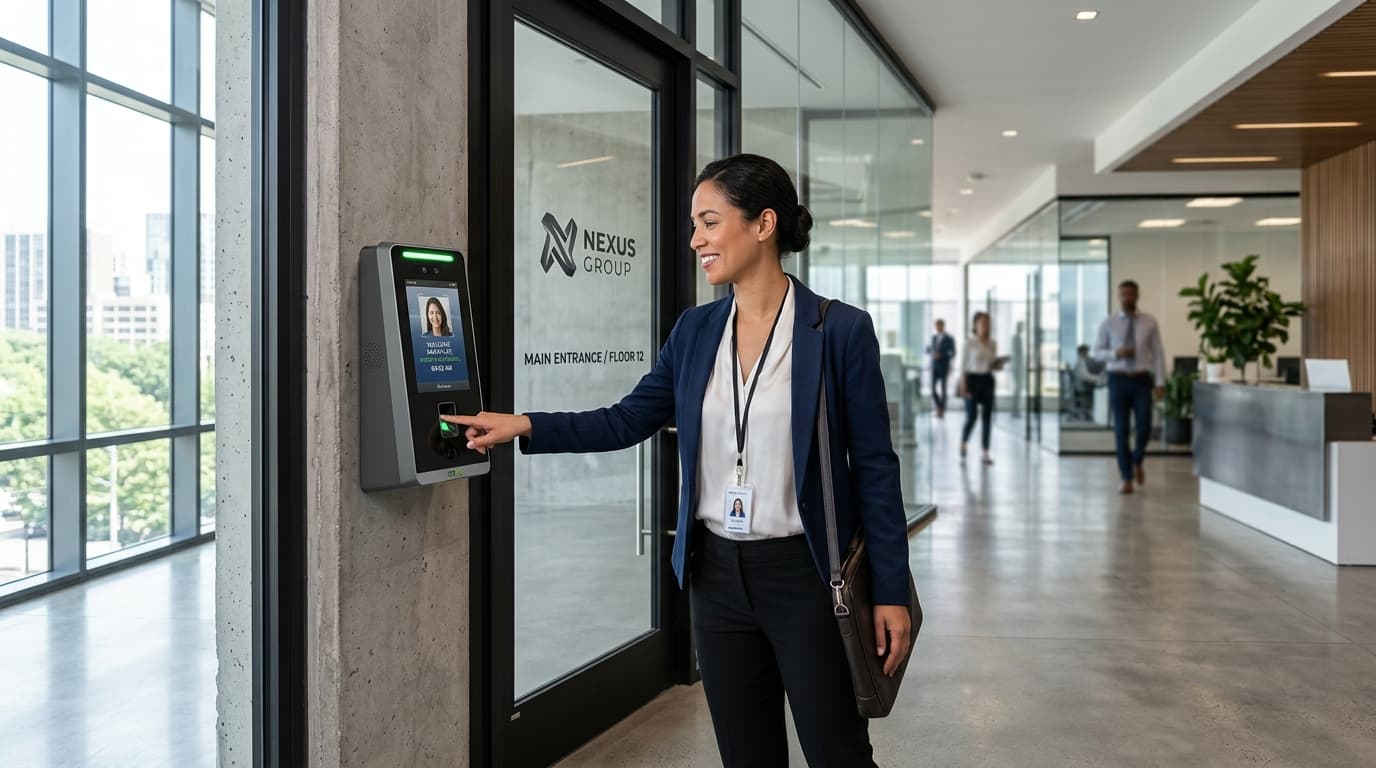
It usually starts as a favour. A colleague is stuck in traffic on the Muscat Expressway and sends a message asking someone to sign him in. No harm meant. Everyone has been late at some point.
Then it becomes a habit. Then it becomes normal, and eventually a handful of people are being paid for hours they did not work, while the ones who show up on time notice and quietly resent it.
That is buddy punching, and it is the most common form of time theft in workplaces here. Here is how it happens, why the usual fixes do not work, and how to deal with it without turning your business into a surveillance operation.
What buddy punching actually is
Buddy punching is one employee clocking in or out on behalf of another. It works anywhere the check-in method can be handed over: a signature on a sheet, a PIN typed into a keypad, a card tapped on a reader, or a shared login on a computer.
The pattern matters more than the definition. Buddy punching is rarely a single dramatic act of dishonesty. It is a small favour repeated until it becomes routine, which is exactly why it is so hard to spot and so uncomfortable to confront.
Why it is easy to dismiss and expensive to ignore
Fifteen minutes does not sound like anything. That is the trap.
Run the sum with your own numbers rather than taking anyone's word for it. Take one employee's hourly cost, multiply by the minutes lost each day, then by working days in a month, then by the number of people doing it. In a business with a hundred staff, even a small share doing this a few times a week turns into a meaningful monthly figure, and it repeats every month indefinitely.
You will see dramatic percentages quoted for what time theft costs businesses. Ignore them and do your own calculation. Your payroll, your shift patterns, your headcount. The number you get will be more persuasive to your management team than any statistic from an overseas report anyway.
There is a second cost that does not show up in payroll at all. Your reliable staff know who is doing it. When nothing happens, the message is that turning up on time is optional and being conscientious is for people who have not worked out the system yet. That is a slower and more expensive problem than the wages themselves.
The forms it takes
Buddy punching is the headline, but time theft in practice covers a few related habits:
Proxy check-in. One person signing in for another who has not arrived.
Early in, late out. Clocking in fifteen minutes before actually starting work, or clocking out well after finishing.
Extended breaks. Breaks that quietly run over, unrecorded because nobody is tracking them.
Ghost entries on site. In multi-site or field work, hours recorded for a location the person never reached.
Retrospective timesheets. Filling in a whole week from memory on a Thursday afternoon, which is not fraud exactly, but it is not a record either.
The last one is worth dwelling on because it is so common and so rarely seen as a problem. A timesheet completed from memory is a set of estimates. Everything you calculate from it inherits that.
Why the usual fixes do not work
Most businesses try the same three things before landing on something that works.
Stricter supervision. This makes attendance a supervisor's responsibility, which means it competes with everything else they are meant to be doing. It also puts them in the position of policing their own team, which few people do enthusiastically.
Cards or PIN codes. These feel like an upgrade from a paper sheet, but they change nothing about the underlying problem. A card can be handed over. A PIN can be shared. You have made the record neater without making it truer.
Warnings and policy. A memo reminding staff of the attendance policy works for about a fortnight. It does not fix anything structural, and if it is not enforced consistently it makes things worse by signalling that the rule is decorative.
The pattern in all three is the same. They try to discourage the behaviour rather than making it impossible. As long as one person can physically check in as another, someone will.
What actually stops it
The reliable fix is a check-in method that cannot be delegated.
That is the whole appeal of biometric attendance. A fingerprint, a face or a palm vein pattern has to be physically present at the reader. Nobody can do it on your behalf as a favour, so the question of whether they should simply never arises. It stops being a matter of honesty and becomes a matter of physics.
For staff who do not work at a fixed location, the equivalent is mobile check-in with location capture. The record shows where the check-in happened, so hours logged for a site nobody visited do not survive. It is worth being straightforward with field teams about this: capture location at check-in and check-out, not continuously through the day, and tell them that is what you are doing. Handled openly it is uncontroversial. Handled quietly it feels like being watched.
If you are weighing up which method suits your workforce, fingerprint, facial and GPS check-in each suit quite different working patterns, and most businesses of any size end up needing more than one.
One thing to sort before you buy hardware: biometric data is treated as a protected category under Oman's data protection law, which brings specific obligations around consent and secure storage. Confirm the consent and permit rules that apply first, because they apply to you as the employer regardless of which vendor you choose.
The knock-on effect on payroll
Time theft is not only a wages problem. It contaminates your records.
Under Oman's Labour Law, employers are expected to keep accurate working hours records and produce them if the Ministry inspects. If your attendance data includes hours nobody worked, those records are wrong, and everything calculated from them is wrong too: overtime, leave deductions, the figures that go into your salary file.
That matters more since the WPS wage transfer window tightened to three days. There is no longer room to discover a discrepancy at month end and unpick it before submission. The data has to be right as it accrues. We have covered how attendance data feeds WPS payroll and overtime compliance in more detail.
Doing this without souring the place
This is the part most articles skip, and it decides whether the rollout works.
If you introduce biometric attendance with an announcement about theft, you have told your entire workforce you suspect them. The people who were never doing it, which is most of them, will remember that.
A better framing is accuracy, and it has the advantage of being true. Accurate records mean overtime gets paid correctly, disputes get settled from evidence instead of argument, and nobody has to reconstruct a week from memory. Those are genuine benefits to staff, not just management.
A few things that help:
Explain the change before it happens, not on the morning it appears
Be clear about what is recorded, what is not, and who can see it
Apply it to everyone, management included, since nothing breeds cynicism faster than exemptions
Offer a non-biometric option for anyone who does not consent, which you need to do anyway
Fix the process problems it exposes rather than only punishing individuals
That last point is the one businesses get wrong. When accurate data reveals that a shift consistently overruns, the useful response is usually to look at the shift, not to discipline the person.
A short checklist
Can one employee check in on behalf of another today? If yes, that is your gap
Are breaks recorded, or assumed?
Can you settle a disputed hour from records, or does it come down to who argues harder?
For field staff, can you confirm where a check-in happened?
Do your attendance records match what actually goes into payroll?
Have you explained the reason for any change to your team, in accuracy terms?
Where Markd fits
Markd is built around exactly this problem. The biometric terminals handle check-in for staff at fixed locations, so attendance cannot be delegated to a colleague. Markd Field covers teams working away from your premises, recording where a check-in happened rather than trusting a retrospective timesheet.
Both write to the same attendance record, which matters if you have office staff and site staff, because two disconnected systems is how gaps reappear at the join. If you want the detail, start with our biometric attendance system in Oman page.
Frequently asked questions
What is buddy punching? One employee clocking in or out for another. It is possible with any method that can be handed over, including signatures, PIN codes and access cards.
How do I stop buddy punching? Use a check-in method that cannot be delegated. Biometric check-in requires physical presence, and mobile check-in with location capture serves the same purpose for staff working away from a fixed site.
Is monitoring employee attendance legal in Oman? Yes. Employers are expected to keep accurate working hours records. If you use biometric methods, the data is treated as a protected category under the PDPL, so consent and secure handling requirements apply.
How do I introduce this without upsetting my team? Frame it around accuracy rather than suspicion, explain what is recorded before you switch it on, apply it to everyone including management, and offer an alternative for anyone who does not consent to biometrics.
About CodeStack
CodeStack is a trusted software company in Oman delivering custom ERP systems, advanced GRC platforms, and scalable digital solutions for growing businesses. We help organizations streamline operations, improve compliance, and accelerate digital transformation through secure, business-focused software built for long-term success.
Start the Conversation
Ready to engineer your
next success?
Let's build something extraordinary together. Our team is ready to transform your vision into a scalable reality.