GPS Attendance for Field Teams: Construction, Sales, Logistics and Maintenance
Construction, sales, logistics and maintenance teams rarely pass a fixed reader. Here is how GPS attendance works for field staff across Oman, and what to look for.
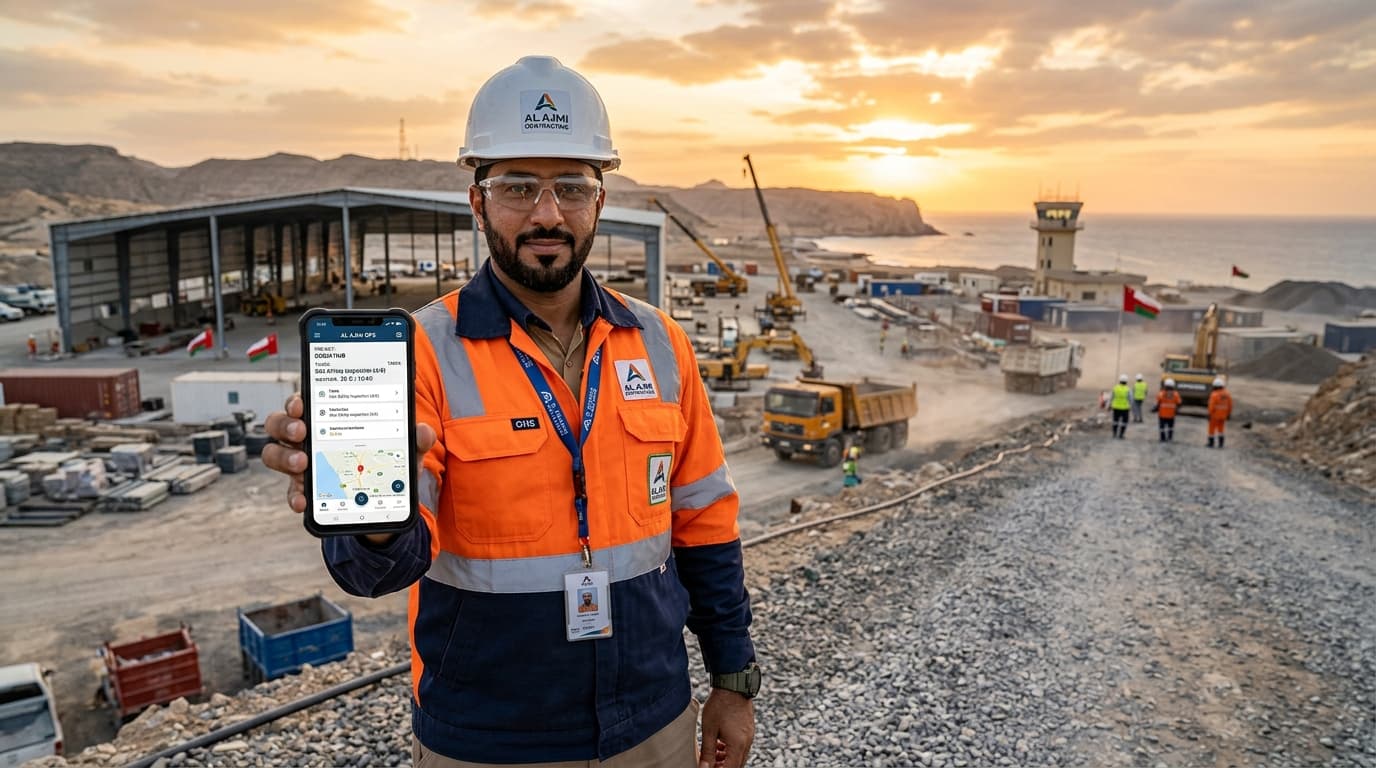
There is a category of employee that fixed attendance systems were never designed for. They start the day at a site in Barka, move to another in Rusayl, and never go near head office. On paper their attendance is a timesheet filled in on Thursday from memory.
If that describes a meaningful share of your workforce, the question is not which reader to install. It is how to get a reliable record from people who are never at the door.
We have compared the five main attendance methods elsewhere. This one is about the field case specifically, and what it looks like industry by industry.
Why the timesheet problem is different in the field
For office staff, attendance is largely a punctuality question. For field teams it is a different thing entirely, because the record has to answer where as well as when.
That changes what a good record needs to contain, and it introduces problems a fixed reader never has to solve. Nobody is watching the check-in. Signal is unreliable. The employee may visit three locations in a day. And in many cases the hours are billable to a client, which means the record is not just a payroll input, it is a commercial document.
A timesheet completed from memory fails all of that. It is a set of estimates written by someone who is trying to remember Tuesday.
What GPS attendance actually does
Mobile check-in with location capture records where and when someone started and finished. In practice a workable field setup needs four things.
Location stamping. The check-in carries a location, so hours are tied to a place rather than asserted afterwards.
Geofencing. You define a perimeter around each site and check-ins are only accepted inside it. This is what stops a check-in from the car park down the road, and it removes the argument entirely rather than creating one.
Selfie confirmation. A quick photo at check-in confirms the right person is checking in, not one crew member checking in for four. Without it, a shared phone reintroduces exactly the buddy punching problem you were trying to solve.
Offline capability. This one gets underestimated. Signal in the interior, inside structures, or in a basement plant room is not guaranteed. The app should record locally and sync when connectivity returns, with nothing lost. If it requires live signal to register a check-in, it will fail on the sites where you most need it.
How this plays out by industry
Construction and contracting. The core need is site-level attribution. Who was at which site on which day, across several concurrent projects. That feeds labour cost per project, not just payroll, and it settles the recurring argument about whether a crew was where the schedule said. Geofencing per site is what makes this work.
Sales and business development. Staff start at a client and finish at another. The value here is less about policing hours and more about having a record that reflects a working day accurately, so that people who genuinely start at eight in Qurum are not treated as absent because they never reached the office.
Logistics and delivery. Drivers start early, often from a depot, sometimes directly from a route. Attendance needs to capture the actual start rather than the depot arrival, and it needs to survive a day with patchy signal along the route.
Maintenance and field service. Engineers move between customer locations. Where hours are billed to the customer, the attendance record becomes the evidence behind the invoice, which raises the bar on accuracy considerably. A disputed invoice is a worse outcome than a disputed timesheet.
Remote sites and camps. Long rotations, limited connectivity, sometimes no fixed infrastructure at all. Offline capability stops being a convenience and becomes the requirement.
The trust conversation
This is the part that decides whether the rollout succeeds, and it is worth getting right before launch rather than after the complaints start.
Location tracking makes people uneasy, and dismissing that is a mistake. The distinction that matters is between capturing location at check-in and check-out, and tracking someone continuously through their day. The first is a reasonable record of where work started and ended. The second is surveillance, and your team will experience it that way.
Be explicit about which one you are doing. If it is check-in and check-out only, say so plainly, in writing, before it goes live. If people believe they are being followed all day when they are not, you have taken the reputational cost of something you never implemented.
Two other things that help. Apply it to everyone in a field role, supervisors included. And frame it around what it fixes for them: hours recorded correctly, overtime paid without argument, no reconstructing the week on a Thursday afternoon.
Where the record goes next
A field attendance record that lives in its own app is only half a solution. The reason most businesses end up doing manual work at month end is that office attendance sits in one system and field attendance in another, and someone has to merge them before payroll can run.
With the WPS wage transfer window now at three days from the end of the wage entitlement period, that merge is happening under real time pressure. The fix is for both to write to the same record, so that attendance feeds payroll without a reconciliation step in between.
That is how Markd is structured. Markd Field covers mobile check-in with GPS, geofencing, selfie verification and offline sync, and it writes to the same attendance record as the biometric terminals used at fixed sites. A business with office staff and site crews runs one system, not two.
If your workforce is split between fixed locations and the field, the biometric attendance system side of the platform covers the other half.
Frequently asked questions
What is a GPS attendance app? A mobile app that records attendance with a location stamp, so hours are tied to where work started and finished rather than reported from memory.
Does GPS attendance work without internet? It should. A well-built app records the check-in locally and syncs when connectivity returns, which matters on remote sites and inside structures where signal is unreliable.
How does geofencing work for attendance? You define a perimeter around each site, and check-ins are only accepted inside it. Attempts from outside the zone are rejected, so the record reflects actual presence.
Is GPS attendance legal in Oman? Employers are expected to keep accurate working hours records. Location data should be handled with the same care as other personal data, so be clear with staff about what is captured and limit it to check-in and check-out rather than continuous tracking.
Can one system handle both office and field staff? Yes, and it avoids the month end merge. Look for a platform where fixed terminals and mobile check-in write to the same attendance record.
About CodeStack
CodeStack is a trusted software company in Oman delivering custom ERP systems, advanced GRC platforms, and scalable digital solutions for growing businesses. We help organizations streamline operations, improve compliance, and accelerate digital transformation through secure, business-focused software built for long-term success.
Start the Conversation
Ready to engineer your
next success?
Let's build something extraordinary together. Our team is ready to transform your vision into a scalable reality.